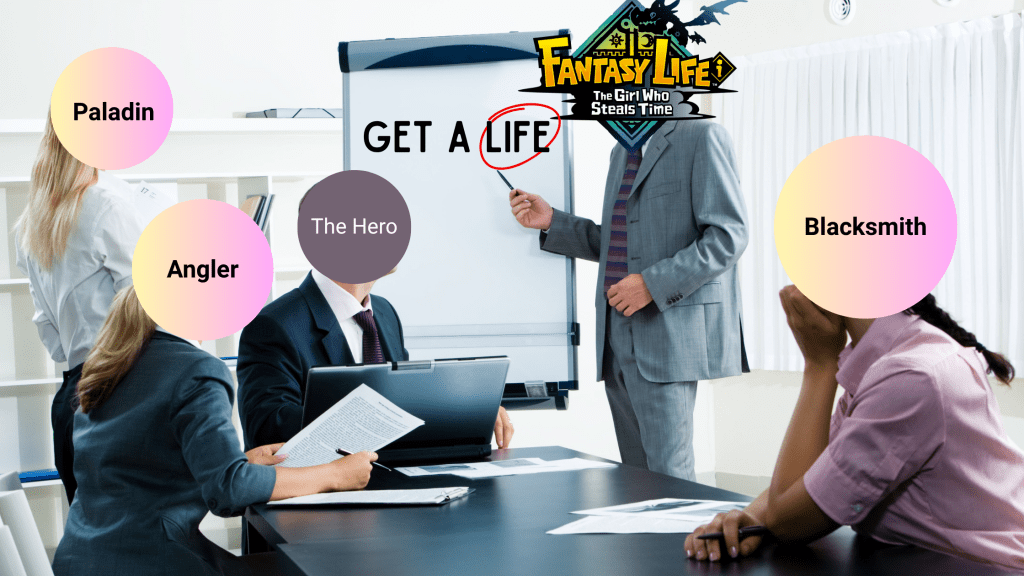
What day is it? How much time has passed?
I did not expect to fall in love with Fantasy Life i: The Girl Who Steals Time. I had no history with the franchise or its developer, and I hadn’t played the original Fantasy Life on the Nintendo DS. As far as I could tell, this game looked like just another “cozy” life sim: colorful, cute, and possibly aimed at a younger audience than me.
Oh wow, do I feel sheepish. I am 40 hours deep into this game, and I am hooked. hard.
On the surface, Fantasy Life i: The Girl Who Steals Time feels like a classic fantasy RPG. You play as a young adventurer accompanying the enthusiastic archaeologist Edward, who is studying a recovered glowing dragon skeleton. But when an unexpected enemy attacks, the ancient dragon stirs to life—and catapults your unlikely team of heroes 1,000 years into the past.
Once you get your bearings in this new-yet-old world, you’re summoned before the young King Ranoah. Despite the extraordinary circumstances of your arrival, Ranoah cuts straight to the pressing issue: you’re unemployed.
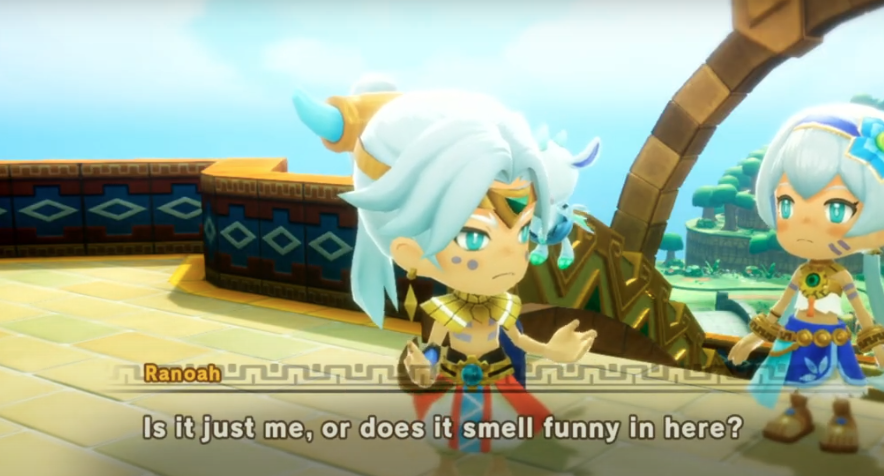
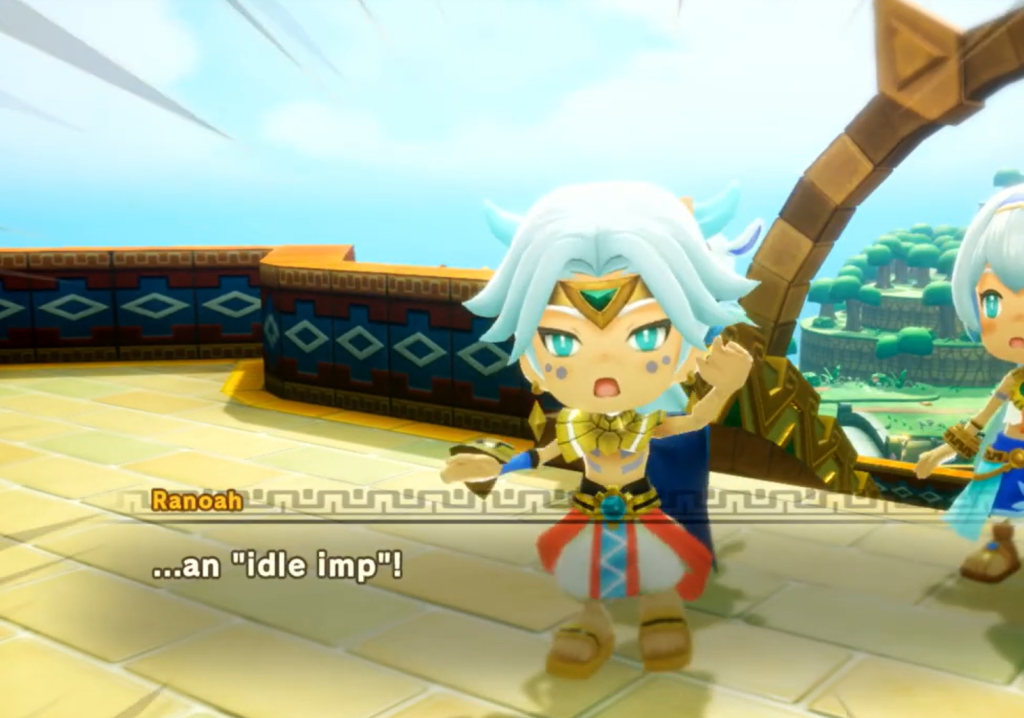
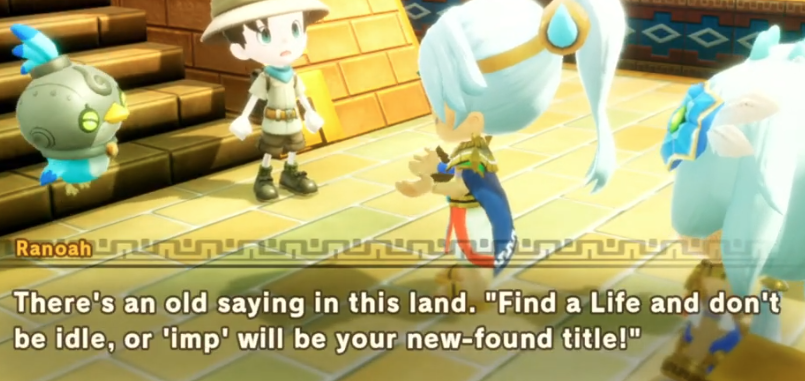
Pfft! Get a Life!
There is only one solution for your lack of net worth: get a Life! Err—a profession, rather. In Fantasy Life i, jobs are known as Lives, and there are numerous options to choose from: paladin, mercenary, hunter, mage, miner, woodcutter, angler, cook, blacksmith, carpenter, tailor, alchemist—and later, artist and farmer. You can, and indeed must, train in all 14 “Lives” to complete quests and support the communities you encounter along your journey.
Okay, wait—hold up. Isn’t the player supposed to be the hero? And now the hero’s value is measured in… productivity? Well, yeah—kind of.
This game feels cozy. (Curious about what makes a game “cozy?” I wrote about that earlier this year.) What I mean is, there’s no harsh penalty for taking your time with different professions. No villagers chucking tomatoes or scolding you for skipping a 9-to-5 grind. But still, gaining proficiency is the only way to move forward.
Sure, in most RPGs, training—whether it’s gathering, crafting, or combat—is how we track a character’s skill level. And yes, that’s true here, too. But Fantasy Life insists that before you even glance at the main storyline, you get a job. Early on, the game enjoys reminding you that this is the community’s top priority. My favorite example: in the square just outside King Ranoah’s royal courtyard, there’s an NPC nervously confessing he’s been idle so long, he fears he’s turning into an actual “idle imp”—tail and all.
Yes, the overarching plot involves evil sorcerers, time travel, kidnappings, and unwilling transformations—but all of that will patiently wait while you chop apple trees or stitch a blue cape for a villager’s graduation. What matters most is how you contribute to your community—through what you make.
Capitalism as Satire
I feel pretty confident writing that Fantasy Life i: The Girl Who Steals Time knows exactly what it’s doing. The game borrows exploration mechanics from classic RPGs like The Legend of Zelda, customization features from cozy life sims like Animal Crossing, and skill progression systems reminiscent of RuneScape or World of Warcraft. But more than that, it clearly pokes fun at productivity itself—and our compulsion to always be doing something.
Coincidentally, I started playing Fantasy Life i around the same time I rebooted World of Warcraft for a zone-locked challenge. Both games, in their own way, are rituals of repetition. But where retail WoW often disguises the grind behind epic stakes, Fantasy Life i strips away the illusion. It gamifies labor in its most literal form: each Life (profession) comes with its own mini-game, turning mundane tasks into interactive rituals. The result? A game that’s compulsively playable—not because it hides the grind, but because it celebrates it.
And that’s where the satire shines. Even NPCs are visibly distinguished not by their relationships, but by their jobs. There’s more systemic satisfaction in high-level crafting than in saving the world. It’s funny—but also a little unsettling—because it hits close to home. In a culture that glorifies the hustle, Fantasy Life i presents a bright, absurd caricature of a world where your worth is measured entirely by productivity. It’s a literal capitalist fantasy, where even adventurers are judged by their crafting efficiency.
Criticisms
Of course, the game isn’t perfect. Gear management is clunky, and recipe discovery can feel unnecessarily obscure. The “borrowed” mechanics—from various genre staples—sometimes feel stitched together rather than seamlessly integrated. And while the main story has drawn mixed reactions, I’d argue that its unevenness plays into the game’s satire of goal-oriented design. Still, the developers seem attentive to feedback: quality-of-life updates like improved camera controls suggest an experience that’s still evolving alongside its community.
In Conclusion
What’s fascinating about Fantasy Life i is that it lets you choose your pace—but quietly judges you for resting. It encourages joy, but always links it to effort. And yet, despite (or because of) this tension, the game is deeply satisfying. It’s not just cozy; it’s cozy with commentary. It’s not just about saving the world; it’s about logging the hours until you’re qualified to do so.
In the end, Fantasy Life i is a bright, strange parody of modern life—one where joy and labor are inseparable, where saving the world can wait until you’ve graduated from fledging to apprentice, and where the grind is the point. It’s fun; it’s poignant—it’s a fun game, you guys.

 NPC Dilemma
Leave a comment